
AI In Inventory Management

AI in inventory management is no longer a future-state concept for large enterprises. It is quickly becoming a practical operating advantage for mid-sized manufacturers and distributors that need tighter inventory control, better service levels, and fewer expensive surprises. When deployed correctly, AI helps teams move beyond spreadsheets, static reorder points, and reactive firefighting into automated inventory systems that continuously learn from demand, lead times, supplier variability, and fulfillment constraints.
That matters because inventory problems rarely stay isolated. Excess stock ties up cash, stockouts damage customer trust, and poor planning creates strain across purchasing, warehousing, production, and transportation. With machine learning inventory optimization, inventory forecasting with AI, and smart inventory analytics, companies can make faster and better decisions without ripping out every existing system to do it.
| Point | Details |
|---|---|
| Why AI matters | AI improves inventory accuracy, reduces stockouts, lowers carrying costs, and supports better planning across the supply chain. |
| Core capabilities | Demand forecasting, anomaly detection, automated replenishment, real-time inventory visibility, and supplier risk monitoring. |
| Best-fit companies | Mid-sized manufacturers and distributors with fragmented ERP, WMS, and spreadsheet-based planning processes see strong upside. |
| Operational impact | AI-driven supply chain management helps teams improve service levels while reducing excess inventory and manual planning work. |
| Implementation reality | The best approach usually layers AI onto current systems rather than forcing a full platform replacement. |
| Key success factor | Good data, cross-functional workflows, and measurable business targets matter more than buying the flashiest tool. |
Table of Contents
What AI in Inventory Management Actually Means
Most companies already have inventory software. That does not mean they have intelligent inventory operations. Traditional systems record transactions and apply fixed rules, while AI in inventory management uses statistical models, machine learning, and pattern recognition to recommend or automate decisions based on changing conditions.
In practice, that means the system is not just logging what happened yesterday. It is estimating what is likely to happen next week, next month, and next quarter, then adjusting planning parameters accordingly. That includes demand volatility, seasonality, promotions, production constraints, supplier delays, and location-level inventory imbalances.
For manufacturers and distributors, this creates a more realistic operating picture than manual planning alone. Instead of asking planners to constantly recalculate reorder points and safety stock in spreadsheets, automated inventory systems can surface exceptions, prioritize action, and make decisions faster across more SKUs.
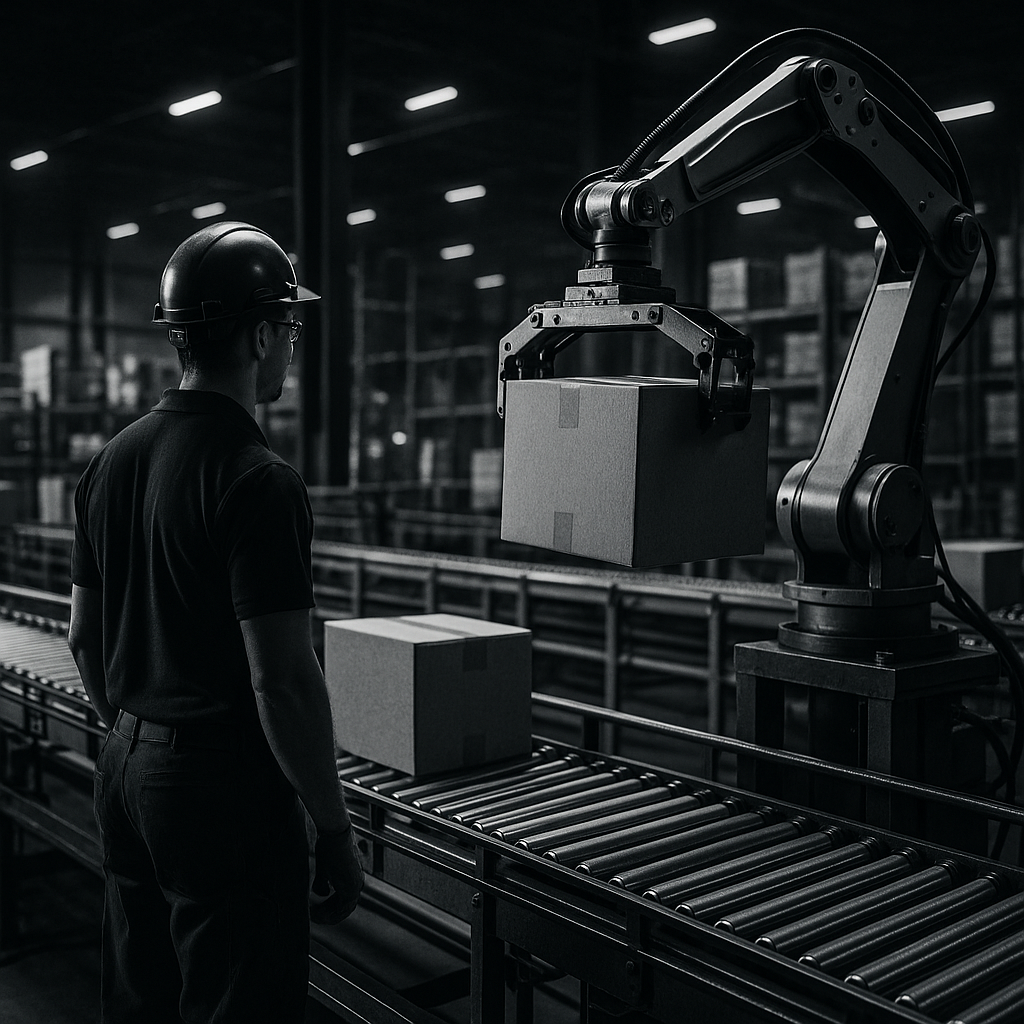
That shift is part of a broader movement in supply chain management and industrial automation. According to the National Institute of Standards and Technology, data-driven manufacturing depends on integrated systems that improve visibility and decision quality across operations. AI simply pushes that principle further by making systems adaptive rather than static.
If your organization is still juggling ERP exports, manual cycle count adjustments, and separate demand planning files, the better question is not whether AI is relevant. It is where the highest-friction decision points exist today and how fast they can be improved through inventory forecasting solutions, warehouse systems integration, and supply chain visibility platforms.
How AI Improves Forecasting, Replenishment, and Visibility
The most immediate value usually comes from inventory forecasting with AI. Standard forecasting methods often struggle when demand is irregular, product lifecycles are short, or external variables keep changing. AI models can analyze larger datasets, detect hidden patterns, and update forecasts more frequently than manual teams realistically can.
That matters because forecasting is upstream from nearly every inventory decision. If the forecast is wrong, purchase orders, production plans, warehouse slotting, and labor scheduling all drift out of alignment. Machine learning inventory optimization improves this by incorporating actual order behavior, lead time variability, historical trends, and exceptions like sudden demand spikes or supplier underperformance.
Replenishment is the next big lever. AI can recommend reorder quantities, reorder timing, and stock transfers between locations using real-time conditions instead of static minimums. In more advanced environments, smart inventory analytics also flag dead stock risk, detect inventory shrink anomalies, and identify where inventory is trapped in the wrong node of the network.
| Inventory Function | Traditional Approach | AI-Driven Approach |
|---|---|---|
| Demand forecasting | Periodic manual updates based on historical averages | Continuous forecasting using live data, seasonality, and exception patterns |
| Reorder planning | Fixed reorder points and planner judgment | Dynamic replenishment based on demand, lead times, and service targets |
| Inventory visibility | Lagging reports from disconnected systems | Near real-time views across ERP, WMS, suppliers, and fulfillment nodes |
| Exception management | Manual issue discovery after problems occur | Automated alerts for shortages, excess stock, and forecast anomalies |
Operator takeaway: AI does not eliminate inventory planning. It eliminates low-value manual recalculation so planners can focus on exceptions, supplier coordination, and service-risk decisions.
These capabilities support broader AI-driven supply chain management as well. Teams can connect demand signals, warehouse movements, purchase orders, transportation updates, and fulfillment performance into one operating model. Sources like IBM, McKinsey Operations Insights, and SupplyChainBrain have all documented how predictive analytics and automation are reducing supply chain waste and improving resilience.
Pro Tip: Start with one painful planning domain, not a company-wide AI mandate. Slow-moving spare parts, volatile raw materials, and multi-location replenishment are often better starting points than trying to optimize every SKU at once.
Business Benefits for Manufacturing and Distribution
The strongest case for AI in inventory management is not theoretical. It shows up in cash flow, service levels, and operating efficiency. When companies reduce overstock without increasing stockouts, they release working capital while improving reliability for customers and internal production teams.
For mid-sized operators, the gains are often more meaningful because there is less organizational slack. A few bad inventory decisions can create expedited freight, missed production schedules, or margin erosion that hits the business immediately. AI helps tighten those decisions by making demand and supply signals more visible and more actionable.

Common business outcomes include:
- Lower inventory carrying costs
- Fewer stockouts and backorders
- Improved forecast accuracy by product family or location
- Better use of planner time through exception-based workflows
- Reduced obsolete and slow-moving inventory exposure
- Faster response to supplier and demand disruptions
There is also a quality-of-decision benefit that is harder to quantify but equally important. Smart inventory analytics creates a common operating picture across operations, procurement, warehousing, and finance. That alignment reduces the familiar pattern where every department is working from different assumptions and blaming another function when inventory goes sideways.
This is where integrated execution matters. If forecasting logic lives in one tool, warehouse data in another, and replenishment decisions happen by email, the system never becomes truly intelligent. Connecting those workflows through industrial systems integration, custom warehouse software, and fulfillment automation solutions is often what turns promising analytics into actual operating gains.
For a broader view of inventory cost and planning discipline, the Investopedia inventory management overview and educational materials from universities such as MIT OpenCourseWare provide useful grounding. The takeaway is simple: better inventory decisions compound across the operation.
How to Implement AI Without Disrupting Operations
The wrong implementation strategy is to buy a polished AI product and assume value will appear on its own. The right strategy is to map the actual inventory workflow, identify where bad decisions originate, and layer intelligence into those points first. For most companies, that means working across ERP, WMS, purchasing, and production systems already in place.
This is one reason a systems integration approach is often more effective than a rip-and-replace software project. Mid-sized organizations rarely have the luxury to pause operations while replacing their entire stack. They need AI that adapts to existing environments, fills data gaps, and improves outcomes incrementally.
A practical rollout usually looks like this:
- Clean and unify core inventory, order, supplier, and lead time data
- Select a narrow but meaningful use case
- Establish business metrics such as service level, inventory turns, or stockout rate
- Deploy forecasting or replenishment recommendations in parallel with current planning
- Validate results, then expand to more product groups or facilities
Teams should also be realistic about data quality. AI can tolerate some mess, but it cannot manufacture operational discipline out of thin air. If item masters are inconsistent, lead times are stale, or receiving transactions are delayed, the first stage of value creation is often fixing those process and data foundations.
Authoritative organizations such as the U.S. Census Bureau manufacturing program and the U.S. Bureau of Labor Statistics regularly show how manufacturing performance is shaped by productivity, input variability, and supply constraints. AI helps, but execution still wins.
Companies evaluating tools should ask direct questions:
- Can the system integrate with our current ERP and warehouse environment?
- How does it handle intermittent demand and long lead times?
- What decisions can be automated versus recommended?
- How are forecasts explained to planners and buyers?
- What measurable outcomes have similar companies achieved?
If you need a baseline before selecting technology, start with operations modernization assessment or inventory systems audit. A good implementation begins with operational reality, not vendor theater.
Common Mistakes and What Good Looks Like
The most common mistake is treating AI as a software feature instead of an operating model. Buying a forecasting engine without changing review cadence, replenishment workflows, supplier coordination, or exception ownership usually produces nice dashboards and limited business impact.
Another mistake is over-automating too early. Not every inventory decision should be fully hands-off on day one. High-value, highly variable, or operationally critical items often need a recommendation-plus-review model before rules are trusted enough for automation.
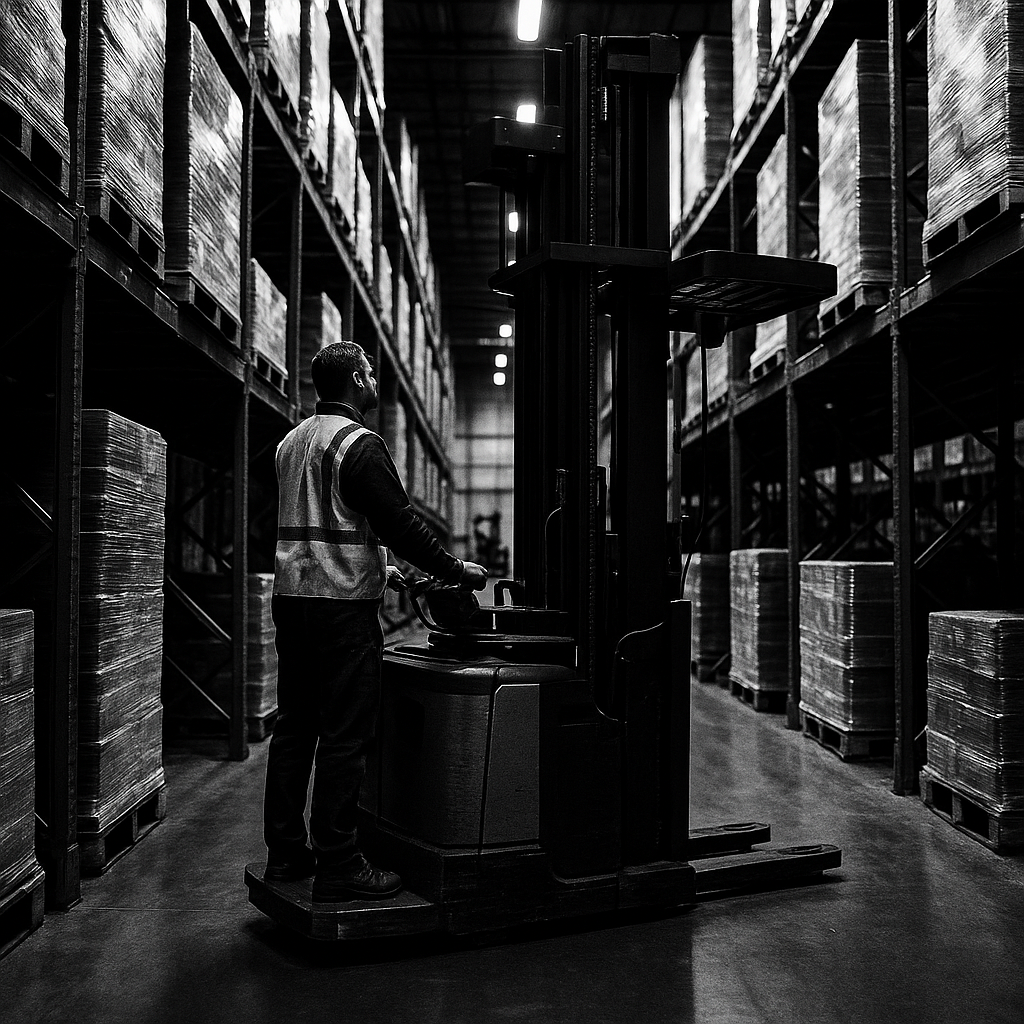
What good looks like is more disciplined and less glamorous:
- One source of truth for item, order, and location data
- Forecasts updated on a defined cadence with measurable error tracking
- Exception-based workflows so planners focus on the few items that matter most
- Role clarity between procurement, planning, warehouse, and production teams
- Closed-loop reporting tying inventory decisions to service and cost outcomes
That operating model is what allows AI in inventory management to scale. It also creates a stronger foundation for broader automation initiatives in warehousing, transportation, and order fulfillment. Companies that get this right usually do not chase the most futuristic narrative. They solve the daily friction that slows execution and drains margin.
For more on this path, explore warehouse automation strategy, manufacturing data integration, and AI demand planning for distributors. The best modernization programs are not built around replacing everything. They are built around making existing operations materially better, one constraint at a time.
Frequently Asked Questions
What is AI in inventory management?
AI in inventory management uses machine learning, predictive analytics, and automation to improve how businesses forecast demand, replenish stock, and monitor inventory levels. It helps companies make faster, more accurate decisions than static rules or manual spreadsheets alone.
How does AI improve inventory forecasting?
AI improves forecasting by analyzing more variables than traditional planning methods, including seasonality, lead times, buying patterns, and sudden demand shifts. It updates forecasts more dynamically, which helps reduce both stockouts and excess inventory.
Can AI reduce stockouts and overstock at the same time?
Yes, if the models are connected to reliable demand, supplier, and inventory data. AI balances service targets with inventory cost by adjusting reorder timing, quantities, and safety stock based on changing conditions.
What types of businesses benefit most from AI-driven inventory management?
Manufacturers, distributors, and multi-location operators with complex SKU counts, variable demand, or fragmented systems often benefit the most. Mid-sized companies especially gain value because inventory mistakes have an immediate effect on cash flow and customer service.
Do companies need to replace their ERP to use AI in inventory management?
No, and in many cases they should not. A strong implementation typically integrates AI with existing ERP, WMS, and purchasing systems so companies can improve planning without a disruptive full-stack replacement.
What data is required for machine learning inventory optimization?
At minimum, companies need reasonably clean data on orders, inventory balances, item attributes, lead times, supplier performance, and location-level movement. Better data improves results, but many projects can start with current systems and improve data quality over time.
What is the difference between automated inventory systems and AI inventory systems?
Automated inventory systems follow predefined rules to execute routine tasks like reordering or stock updates. AI systems go further by learning from historical and real-time data to adjust those decisions as demand and supply conditions change.
How long does it take to implement inventory forecasting with AI?
Initial pilots can often be launched in weeks or a few months, depending on data readiness and system complexity. Broader rollout takes longer, but companies usually see the fastest wins by focusing first on one product segment, facility, or replenishment workflow.
Recommended Reading
- Inventory Forecasting Solutions
- Warehouse Systems Integration
- Operations Modernization Assessment
- AI Demand Planning for Distributors
Want more traffic, leads, & sales?